User-adjustable counterweights
The user can tune balance for headphones with uneven mass or a center of gravity that does not sit naturally in the middle.

Dockix support path
Magnetic levitation gets attention. Daily use depends on the return path: balance tuning, broad headband contact, power-loss buffers and a cradle workflow that stays easy after the effect wears off.
Start with the support-test evidence, then see how the cradle, buffer points and self-parking workflow protect the headset after the levitation effect ends.
Evidence first
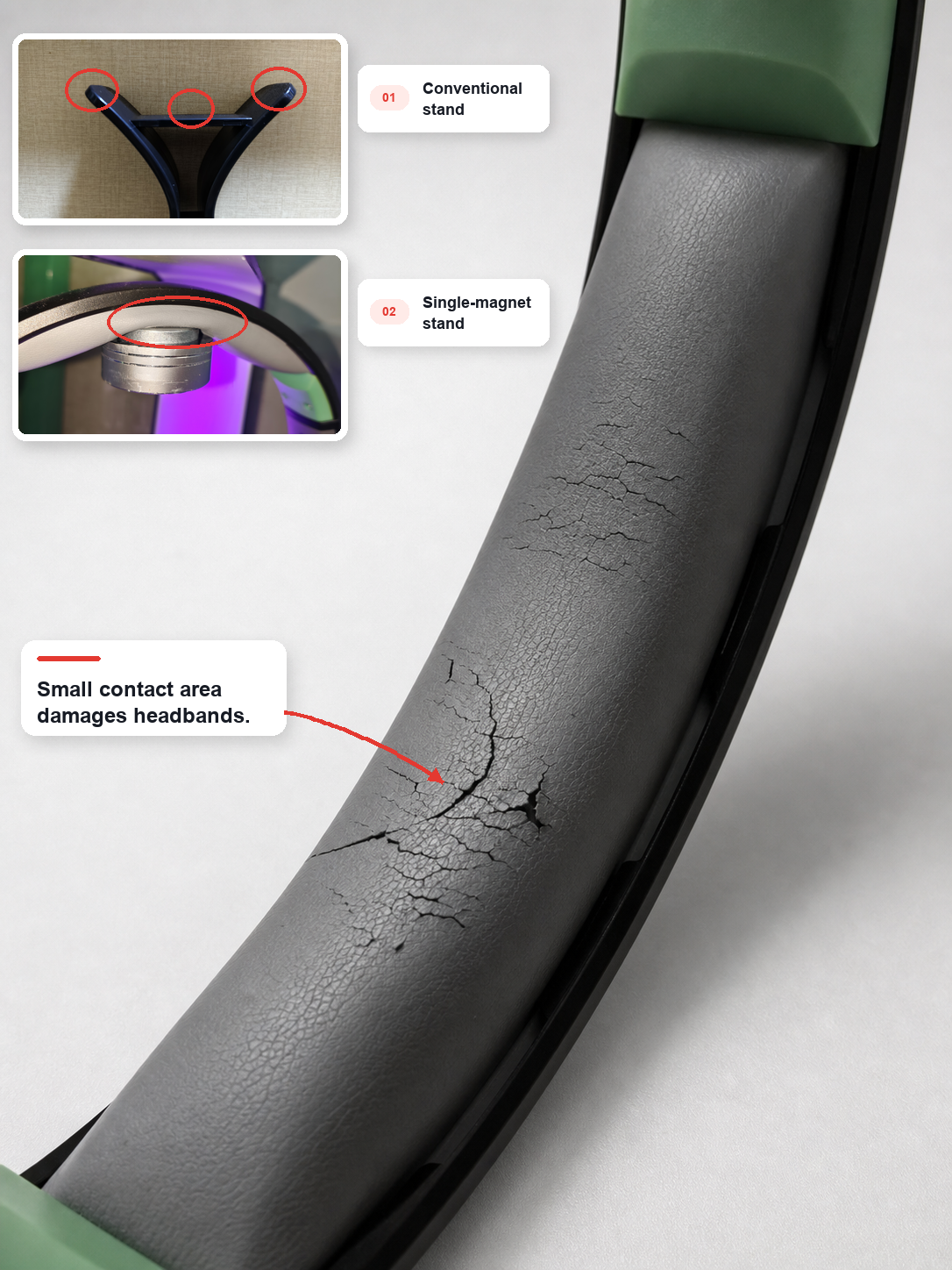
Point-contact headphone stands and magnet-only levitating stands can leave the headband resting on one small hard area. Over time, that concentrated load can become the place where dents, cracks or faster wear begin.
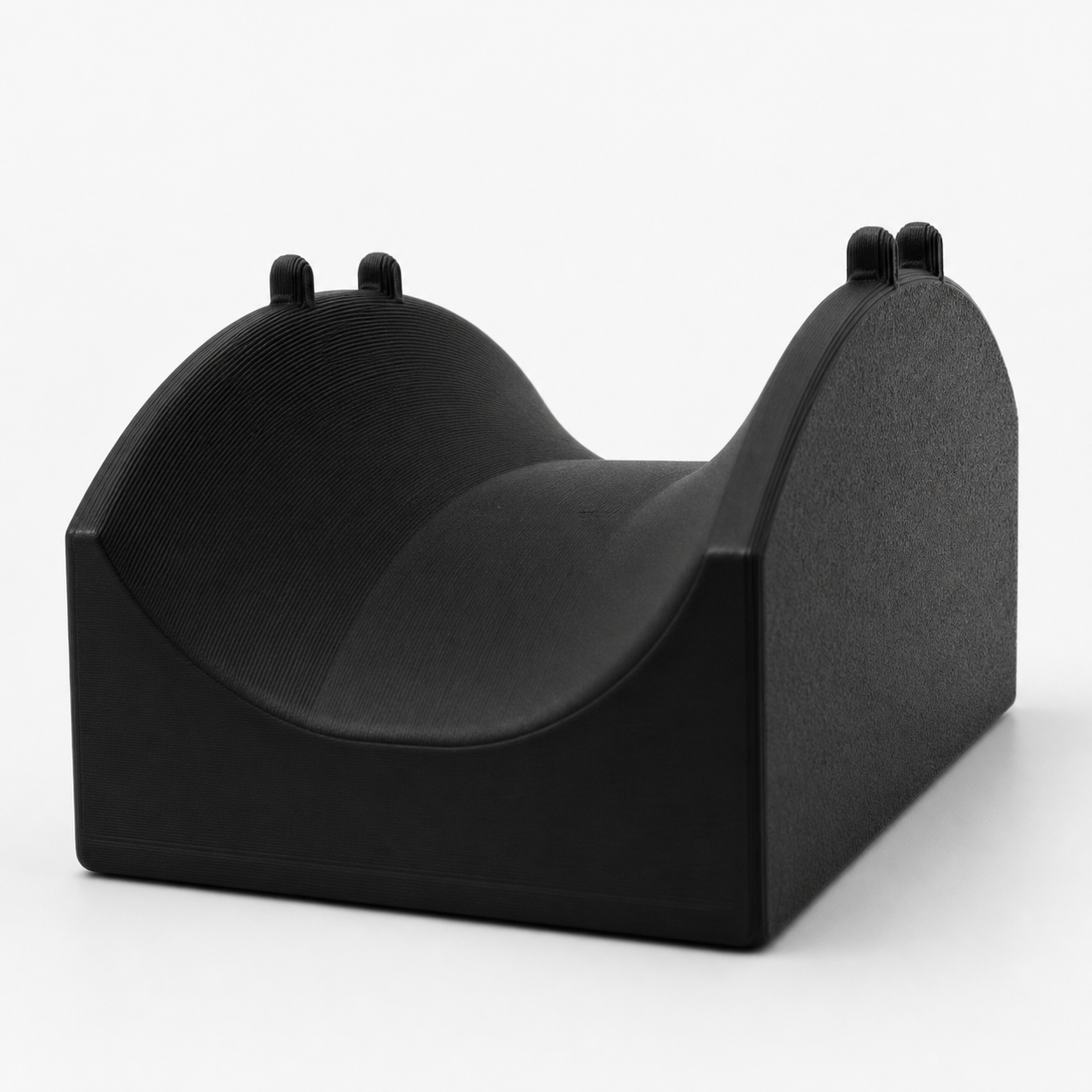
Dockix answers that with a cradle. The headset still floats, but the contact surface is no longer treated as an afterthought.
Contact area matters
The important idea is simple: the headband needs a shaped resting surface, not only a magnetic effect.
Four coordinated responses
The user can tune balance for headphones with uneven mass or a center of gravity that does not sit naturally in the middle.
A wider curved resting surface distributes headband contact across more area than a narrow peg.
If power is interrupted, dedicated buffer points are designed to meet the levitation housing first, helping the headset settle into support instead of onto one hard stress point.
The magnet module can stay in place. Daily use becomes a simple two-stage pick-and-place: lift the headphones, return them to the cradle, without repeatedly handling the magnet.
Product detail evidence
Product detail images sit here because they explain how Beacon 01 behaves internally: air intake, load adjustment and side airflow are technology context, not the main shopping gallery.
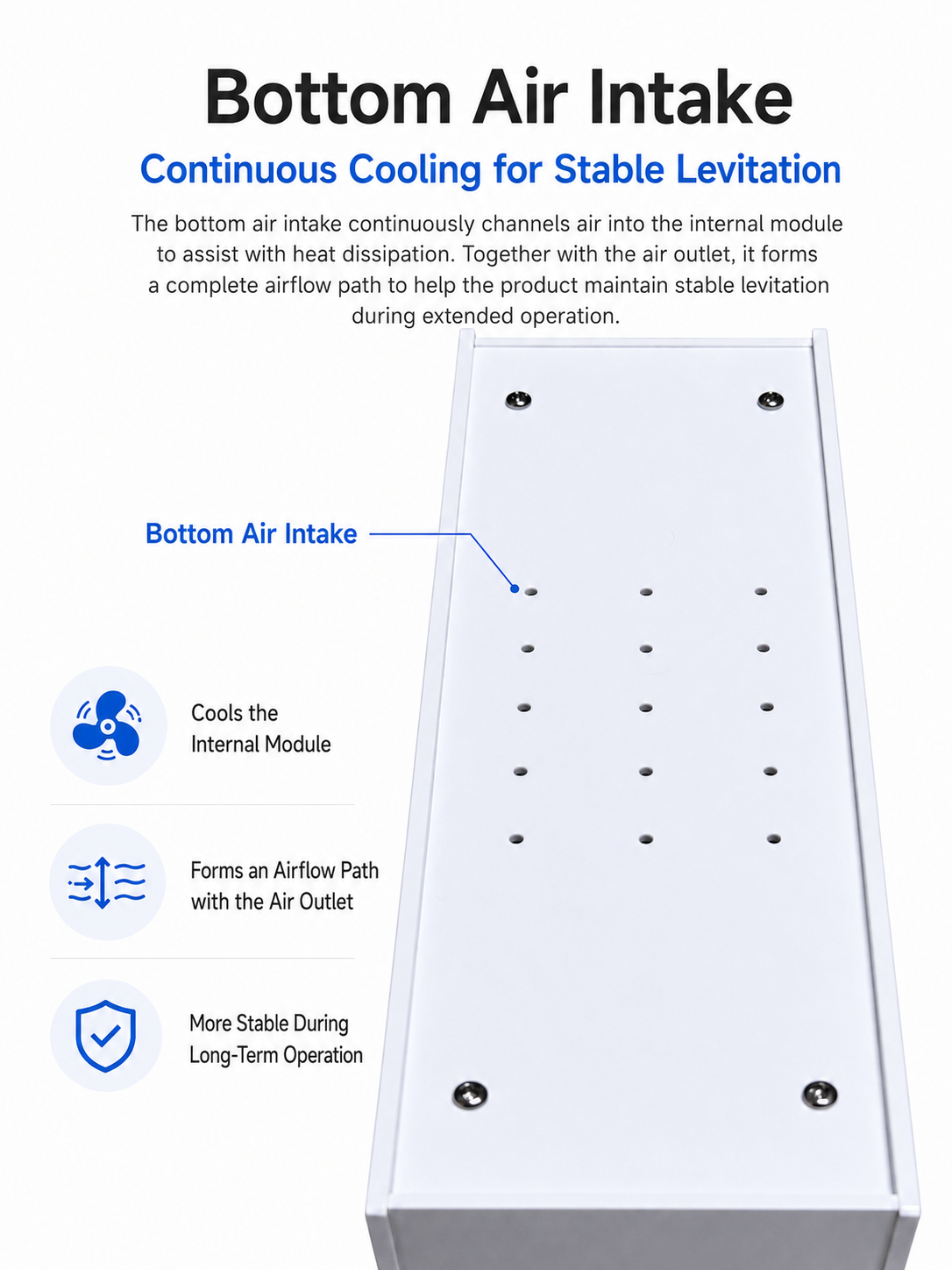
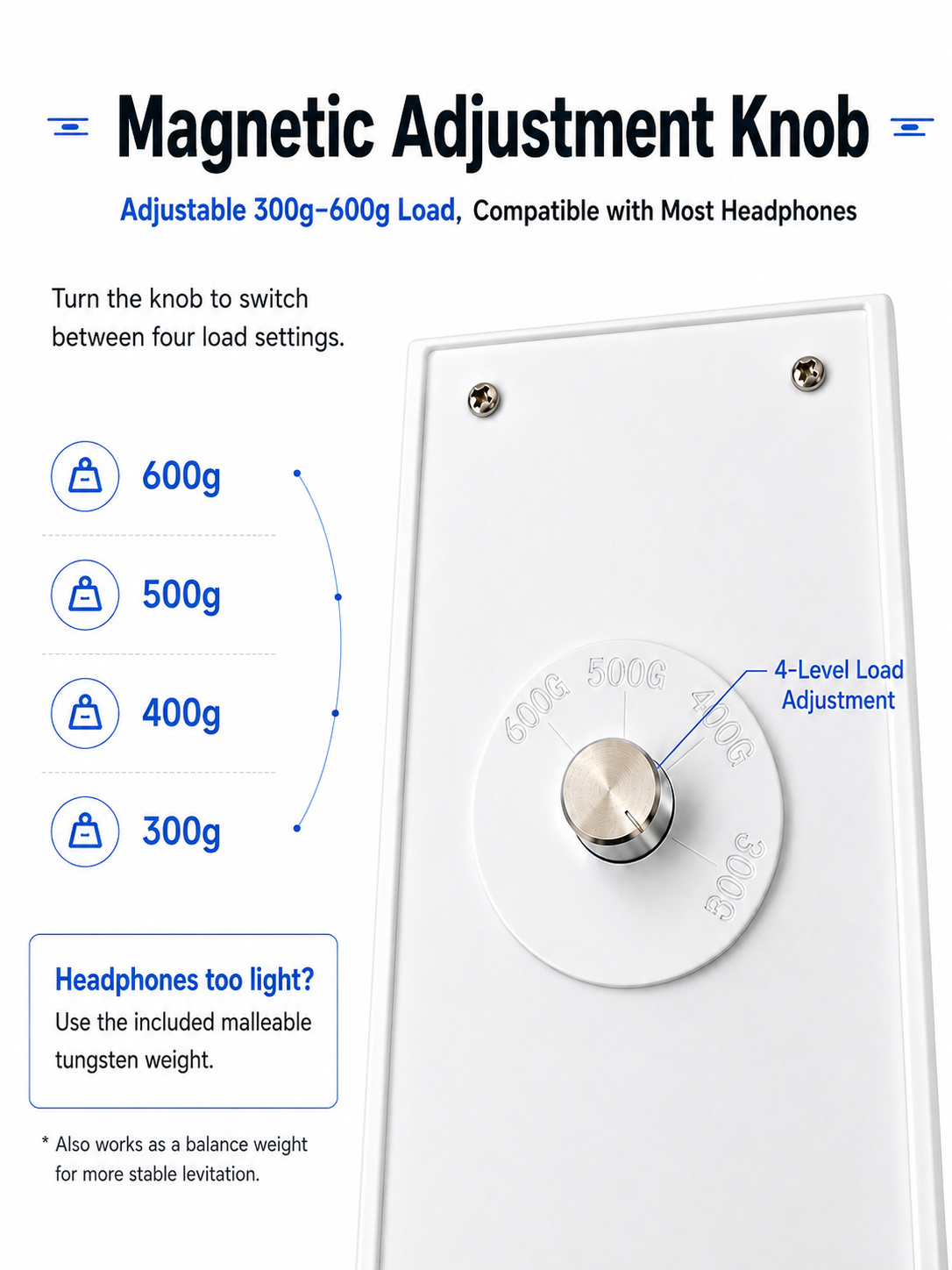
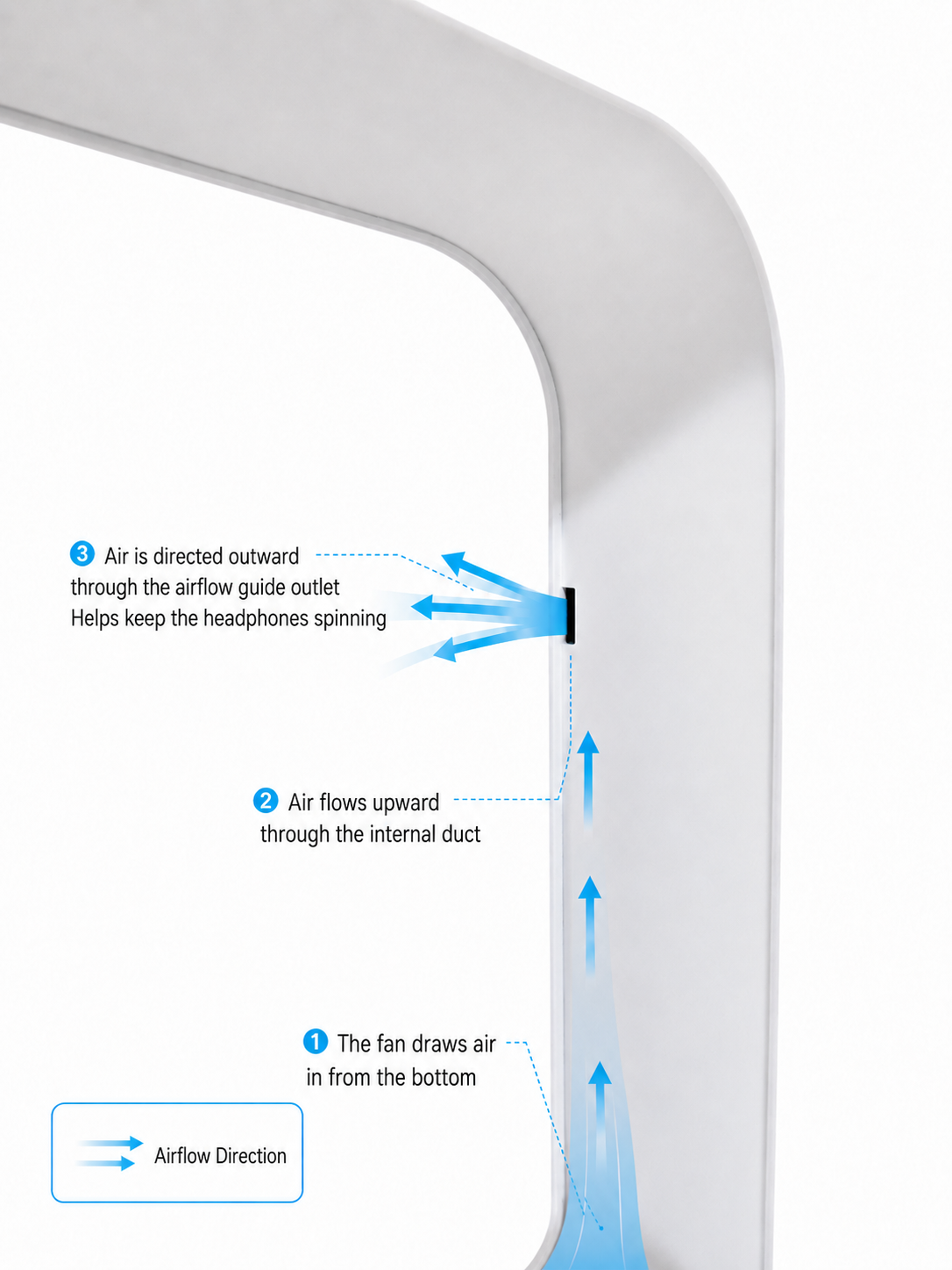
Public content explains user-visible behavior. Internal layouts and material recipes remain inside the engineering files.
Engineering boundary
Dockix explains the user-visible behavior: a broader support surface, balance tuning, power-loss contact path and self-parking cradle.
Internal layouts and material recipes stay inside the engineering files. Public content focuses on what the system does for the user.
Application status
Chinese utility model application accepted by CNIPA. Application date: May 18, 2026.
The patent application covers the support and adaptation structure. It is an application status disclosure, not an issued right.